Launching a supplement brand traditionally meant making a bet before you had a customer: choose a product, place a production order, pay for inventory, and hope the market responds.
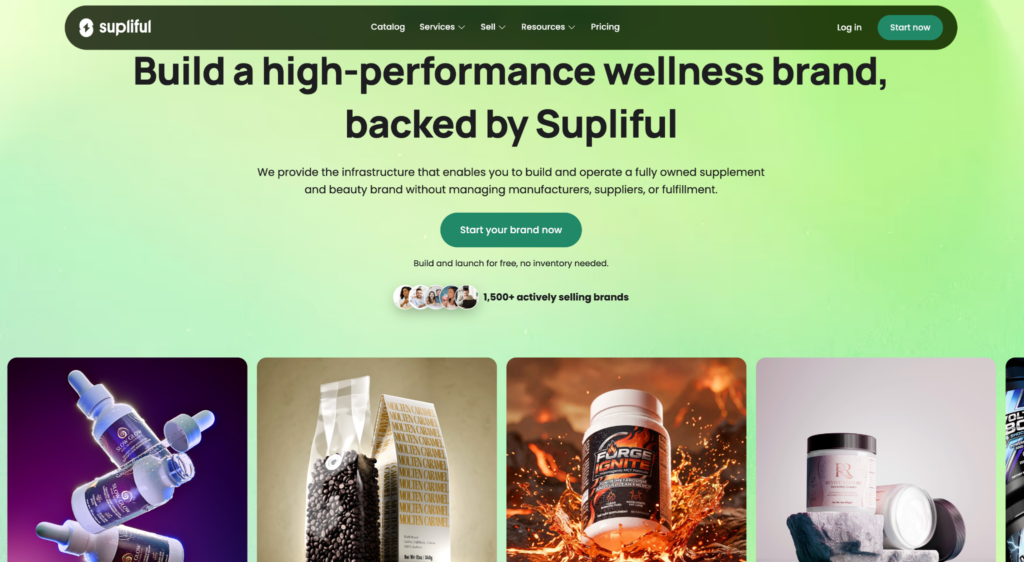
Supliful takes a different approach. Its on-demand model lets merchants select an existing supplement, apply their own branding, publish it through an ecommerce store, and have the product fulfilled after a customer places an order. Supliful says there are no minimum orders and no upfront inventory investment for its private-label model.
That does not make starting a supplement business free. You can avoid putting cash into inventory, but you still need a product strategy, a brand, an ecommerce channel, customer acquisition, and enough margin to make the numbers work.
Here is how the model works.
Why Supliful Was Built
Supliful’s story starts with another ecommerce company.
Its founders previously built Grafomap, an on-demand business selling personalised map posters. According to Supliful, the company survived a difficult period in which the founders invested personal cash, eventually reached $1.5 million in revenue, and was sold to a buyer in the printing industry.
Their next idea was a wellness brand. The problem was familiar to many ecommerce operators: there was no equivalent of print-on-demand for supplements that could produce and ship individual branded orders without requiring inventory.
Supliful was founded on October 7, 2021, around that gap. The company launched dietary supplements in the U.S., opened a warehouse in Denver, and launched its Shopify integration during its first year. In 2022, it announced a $2 million seed round.
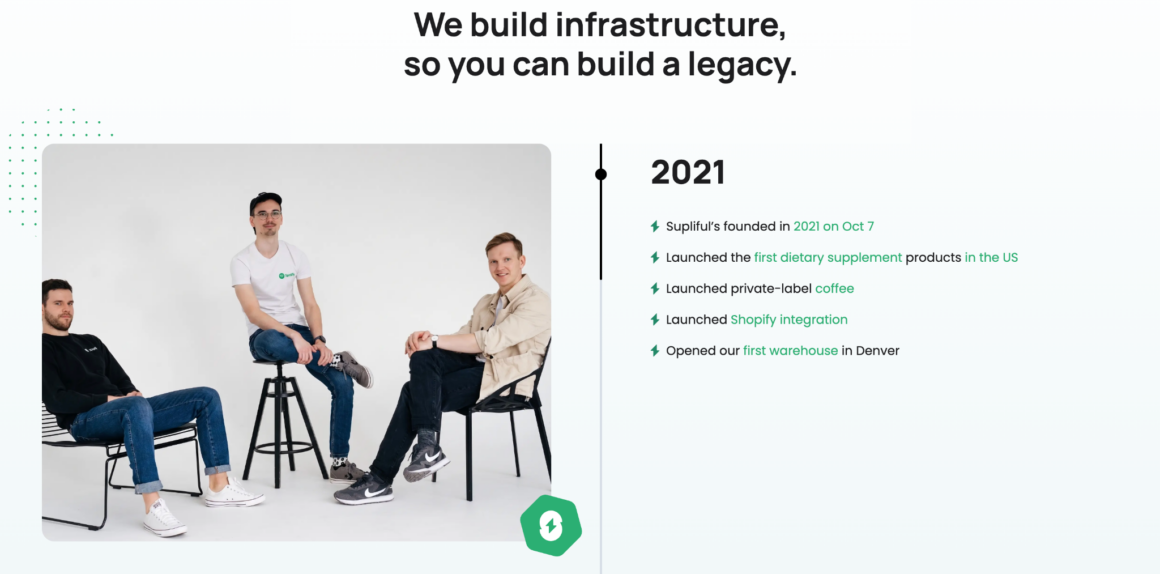
The company’s current positioning follows that original idea: Supliful provides the infrastructure while the merchant builds the brand.
What Does “$0 Upfront Inventory” Actually Mean?
The phrase needs one important qualification.
It means you do not have to buy a batch of supplements before you know whether customers want them.
With conventional manufacturing, a new brand might have to commit to a production run, receive hundreds or thousands of units, store them, and carry the risk of unsold or expiring stock. Supliful’s zero-MOQ model works differently. A merchant can publish a product, wait for a customer order, and then pay Supliful for the product and shipping associated with that order.
The transaction looks like this:
Customer orders → Supliful processes the order → Product is labelled and packed → Product ships to the customer
Supliful currently describes its catalogue as containing more than 200 products and says eligible products can be sold with no minimum order requirement.
What the model does not eliminate are ecommerce, payment processing, branding, marketing, advertising, and other operating costs.
Step 1: Start With the Customer, Not the Catalogue
The first mistake would be opening a supplement catalogue and asking, “Which product should I sell?”
The better question is: Who already has a reason to buy from me?
Supliful’s own content repeatedly frames product selection around niche positioning, market research, audience fit, and product demand rather than simply selecting popular supplements. Its recent guidance also recommends narrowing the market rather than trying to sell broadly to “health” consumers.
For an existing ecommerce operator, the starting point might be obvious. A fitness creator could have an audience interested in performance products. A beauty brand could extend into supplements that fit its customer profile. A wellness publisher could build a product around an existing content audience.
Distribution matters because Supliful provides fulfilment infrastructure, not customers.
Step 2: Choose a First Product
Once the audience is clear, select the product.
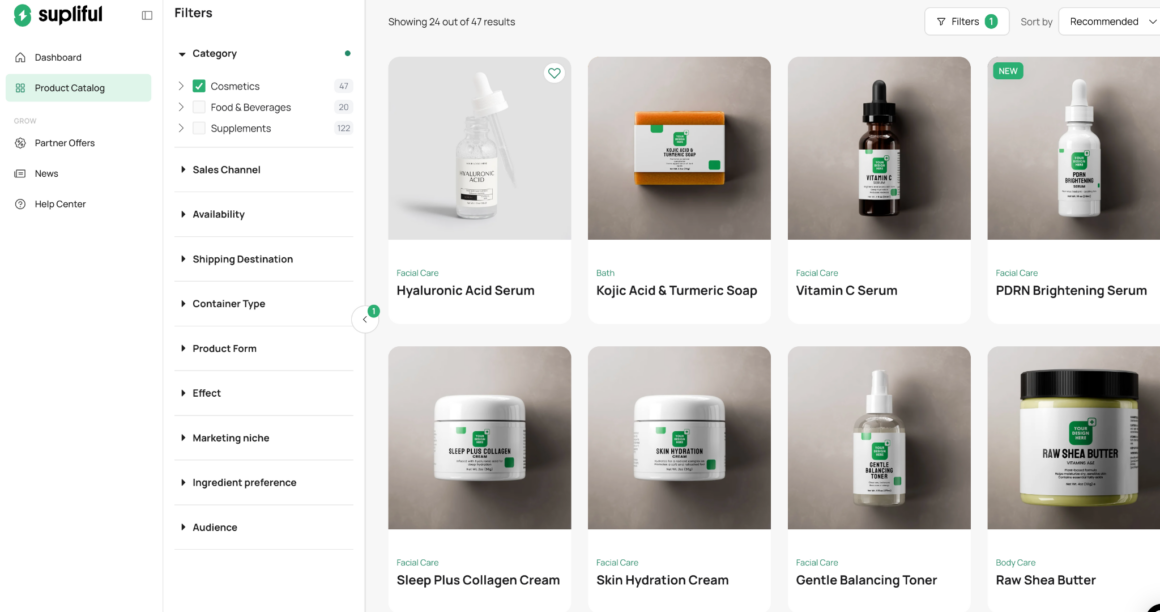
Supliful’s catalog includes products across categories such as gummies, protein, collagen, mushrooms, vitamins, and functional wellness products.
The first SKU should pass several tests:
Audience fit → Demand → Positioning → Selling price → Contribution margin → Repeat-purchase potential
Starting with one well-positioned hero product can also make operational sense. It gives you a cleaner test of demand than launching a broad catalogue with no clear reason for customers to choose one product over another.
The objective is not to find the “best supplement.” It is to find a product for which your audience, positioning, and economics intersect.
Step 3: Turn the Product Into Your Brand
Private labelling changes the relationship between the supplier and the customer.
Instead of presenting an anonymous product, you create the customer-facing identity: the name, logo, colours, packaging, positioning, and product story.
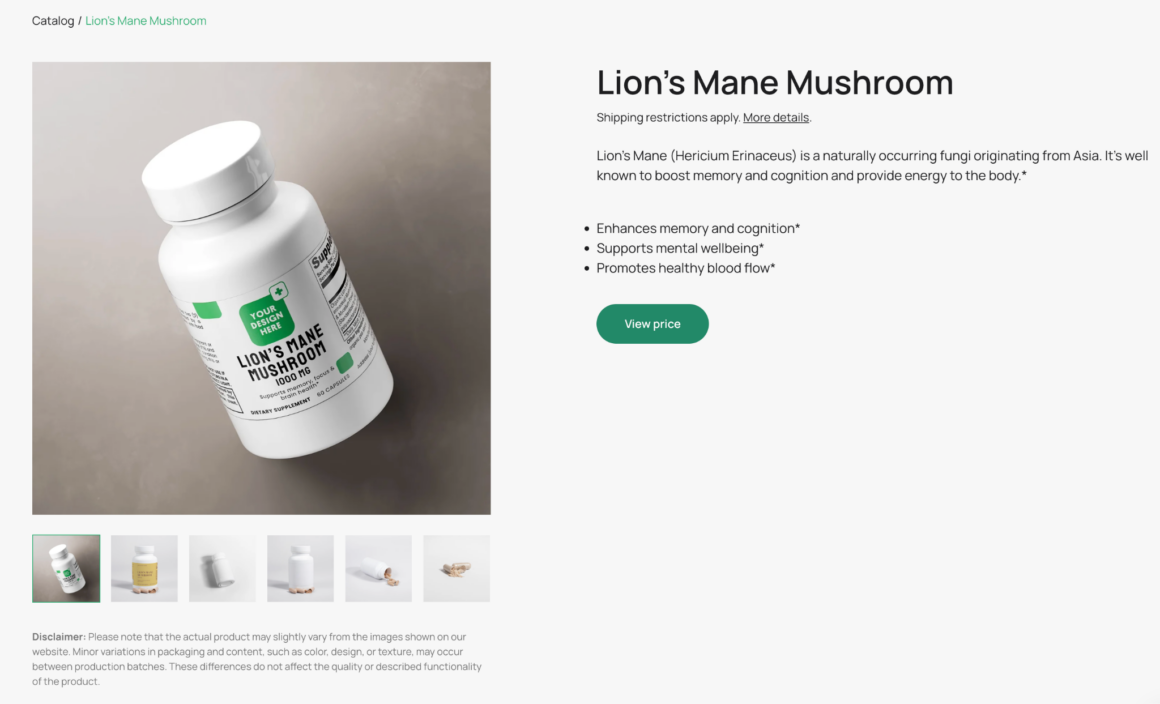
Supliful provides label templates and allows merchants to upload custom label files. Its current platform workflow lets sellers select products, apply branding, set retail prices, and publish them to their store.
There are still compliance requirements. Supliful says labels must meet its requirements before fulfilment, including information such as product identity, net quantity, Supplement Facts, ingredients, and responsible-company information.
That makes the label more than a design exercise. It is part of the product and compliance process.
Step 4: Order a Sample
Zero inventory does not mean zero product validation.
Before putting advertising behind a new supplement, order a sample. Inspect the bottle, label, packaging, and overall customer experience. Use the product to create photography and other marketing assets.
This step also lets you evaluate the gap between what your ecommerce page promises and what arrives at the customer’s door.
For a product business, that physical check is difficult to replace with a digital mockup.
Step 5: Connect Your Store and Let Supliful Fulfil the Orders
Supliful’s current workflow is designed around ecommerce automation.
You connect your store, choose products, upload labels, set retail prices, and publish them. When a customer orders, the order is sent to Supliful automatically. Supliful then charges the connected payment method for the product and shipping costs, prepares the branded item, and ships it directly to the customer.
Current integrations include Shopify, Amazon, and ClickFunnels.
The division of responsibilities is therefore relatively clear:
You own the storefront, pricing, brand, audience, and customer acquisition.
Supliful handles the physical fulfilment layer.
What Does It Actually Cost to Start?
This is where the “$0” headline needs context.
You may be able to start without buying inventory, but the business still has expenses.
Potential costs include:
|
Cost |
Upfront inventory required? |
|
Supplement inventory |
No |
|
MOQ production run |
No |
|
Ecommerce platform |
Usually |
|
Domain |
Usually |
|
Product sample |
Recommended |
|
Branding/design |
Optional |
|
Advertising |
Depends on strategy |
|
Product fulfillment |
Triggered by customer orders |
|
Shipping |
Per order |
Supliful’s current payment model is based on charging merchants when orders are placed rather than requiring an upfront inventory purchase.
The critical calculation remains:
Contribution per order = Selling price − Product cost − Fulfillment/shipping − Payment fees − Customer acquisition cost
A zero-inventory model protects cash from being trapped in unsold stock. It does not protect an unprofitable product from poor unit economics.
When Does the Model Make Sense?
Supliful’s zero-MOQ approach is particularly useful when you are validating demand, operating with limited capital, or testing several products without wanting to commit to inventory. Its latest MOQ guidance notes that bulk manufacturing can become more attractive once a product reaches consistent volume because higher-volume production can improve per-unit economics.
That creates a natural progression:
Test with zero inventory → identify winning SKUs → prove demand → improve economics at scale
The model becomes less compelling when you already have substantial volume, need a proprietary formulation, or have enough predictable demand to justify a direct manufacturing relationship.
The Real Advantage: Testing Before Committing Capital
The strongest case for Supliful is not that it makes building a supplement business effortless.
It changes when you have to make the biggest financial commitment.
Traditional manufacturing asks you to commit capital before you have validated demand. An on-demand private-label model lets you test the product, positioning, pricing, and acquisition channel first.
That distinction matters.
You still have to build the brand. You still need customers. You still need a product people will buy again. And you still need healthy margins.
But you can answer those questions without filling a warehouse first.
FAQ
Yes. Supliful’s current model allows merchants to sell eligible private-label products without purchasing inventory in advance or meeting a minimum order quantity.
Yes. Supliful describes itself as handling manufacturing, fulfilment, packaging, and shipping while the merchant operates the customer-facing brand.
No. The $0 refers to the upfront inventory commitment. Ecommerce, marketing, payment processing, samples, and other operating expenses can still apply.