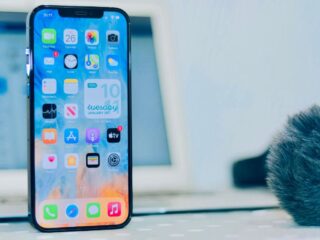
We read more than ever. And yet — somehow — we feel like we read less. That contradiction sits at the heart of what digital technology and reading have become in the 21st century.
A World That Never Stops Scrolling
The numbers are striking. A 2023 report by DataReportal found that the average person spends over 6 hours a day on screens. Much of that time involves reading — news headlines, social media posts, chat messages, articles. But the way we read has shifted in ways that researchers are still trying to fully understand.
Before smartphones, reading meant sitting down with something. A book. A newspaper. You stayed with it.
The Rise of the Five-Second Glance
Smartphones introduced a new reading pattern: the skim. Nielsen Norman Group, a leading UX research firm, found that web readers consume content in an “F-pattern” — scanning the top, then the left side, then stopping. Most people read only 20–28% of the words on a page.
Short. Fast. Then gone.
This isn’t laziness. It’s an adaptation. When hundreds of notifications compete for attention every hour, the brain learns to filter aggressively. Reading habits naturally bent toward speed and selection.
What We Gained
Access exploded. A person in a small town in Moldova now carries the same library as an Oxford professor—in their pocket. To read stories, you don’t need a large library, but the FictionMe app. Want to dive into a new CEO love story right now? No problem, your smartphone can help, and FictionMe has hundreds of books on almost every topic. This matters enormously.
For millions of people who never had access to bookstores or well-stocked libraries, smartphones became the first real reading tool they ever owned. Digital technology and reading intersected here in a genuinely democratic way.
And What We Lost
But something slipped away too. Microsoft’s 2015 study reported that the average human attention span dropped from 12 seconds in 2000 to just 8 seconds — shorter than a goldfish. Critics challenged the methodology, but few challenged the core feeling behind it.
Deep reading — the kind where you lose track of time inside a novel — became harder for many people. Novelist Maryanne Wolf, a cognitive neuroscientist, called this “the loss of the reading brain.” It’s a dramatic phrase. It points at something real.
How Reading Habits Shifted by Age
The shift wasn’t uniform. Consider how different groups changed:
- Teenagers: Reading for pleasure dropped sharply. The American Psychological Association found that in 2016, only 16% of 12th graders read a book, magazine, or newspaper daily — down from 60% in the 1970s.
- Adults 25–44: E-book consumption rose dramatically. Statista data shows global e-book revenues surpassed $14 billion in 2023.
- Older adults: Audiobook use soared. Listening while commuting, cooking, or walking became a new form of “reading.”
None of these groups read less. They all read differently.
The Notification Problem
Here’s something nobody talks about enough. Every buzz, ping, and banner is a reading interruption. A University of California Irvine study found it takes an average of 23 minutes to fully regain concentration after a distraction.
Think about that when your phone lights up mid-chapter.
The smartphone did not kill reading. But it carved reading into smaller and smaller pieces — bite-sized chunks that fit between distractions. Improve reading skills under those conditions, and you’re essentially training to sprint in a marathon.
Digital Tools That Actually Help
Not all the changes were negative. Even most were positive, but people tend to focus on what they’re missing. Once they’re ready to go to the URL in the App Store and install the reader app, there’s no turning back. Several smartphone features genuinely help readers:
Built-in dictionaries. Tap a word, get a definition instantly. Vocabulary grows faster when friction disappears.
Reading apps with progress tracking. Apps like Goodreads, Kindle, and Libby gamify reading in ways that motivate people to finish what they start. Goodreads reported over 150 million members in 2023.
Night mode and adjustable fonts. These small features make reading accessible for people with vision issues or dyslexia in ways printed books simply cannot.
To improve reading skills in the digital age, these tools are not shortcuts — they are scaffolding.
The Surprising Comeback of Long-Form
Something unexpected happened around 2018. Long-form journalism started thriving online. Platforms like Medium, Substack, and The Atlantic saw rising subscriber numbers. The assumption that people only want short content began to crack.
Readers will commit to length — if the writing earns it.
Newsletter platform Substack crossed one million paid subscriptions in 2021. People were paying real money to read long essays in their inboxes. Smartphones delivered them. Smartphones became the reading device for this new long-form renaissance.
How to Protect Your Attention
The phone is not going away. So the question becomes: how do you read well on a device engineered to distract you?
A few things actually work. Turn off notifications before reading. Use “reader mode” in browsers to strip away ads and sidebars. Set a timer — even 20 focused minutes creates real momentum. Some readers use a second, older phone with no social apps installed — purely for books and long articles.
Small changes. Real results.
What the Future Looks Like
AI-generated summaries. Augmented reality overlays. Voice-to-text note-taking while reading. The next decade will layer more technology onto an already complex relationship between digital technology and reading.
The core question will remain the same: are we reading more deeply, or just more?
The Bottom Line
Smartphones changed our reading habits forever — that much is settled. They made reading more accessible, more portable, and more varied than at any point in human history. They also fractured attention, shortened patience, and rewired expectations.
The answer is not to abandon the phone. It’s to read with intention.
Pick up something long tonight. Stay with it past the first distraction. That small act of resistance is, in its own quiet way, a radical one.