Confidence advice has a credibility problem. Half of it sounds like a motivational poster, the other half like a pickup artist seminar. Somewhere in between are people who genuinely want to get better at holding eye contact, speaking up in meetings, or talking to strangers, and still struggle to find a resource that respects their intelligence.
Communication skills training has quietly matured, now there are apps that treat social confidence as a learnable skill with specific, practicable components:
- conversation structure,
- vocal delivery,
- assertiveness and articulation,
- body language.
This guide breaks down what a practical confidence-building roadmap looks like, which app categories help improve communication skills, and a 14-day plan you can start this week.
What “Practical” Social Skills Training Looks Like
If you’ve ever Googled “how to build charisma,” you’ve seen the spectrum – from peer-reviewed research to vague advice about “just being yourself.” Practical training sits on the research end:
1. Precision: you practice a defined micro-skill, like pausing before you respond or mirroring someone’s energy. Never a vague “be more confident” without a concrete action attached.
2. Repetition in context: you train the skill across different scenarios – a work meeting, a dinner, a tense Slack thread – until the response becomes automatic.
3. Honest self-assessment: after each round, you review what happened. This reflection loop is where real skill development lives, and where most charisma courses fall short.
The Confidence Toolkit (What You Need to Practice)
Conversation Starters & Small Talk
The fear of “running out of things to say” is among the most common social anxieties. Memorizing scripts won’t solve it, learning question frameworks and transition techniques that keep dialogue flowing will.
Assertiveness & Boundaries
Saying no, pushing back, asking for what you need. Communication skills coaching here focuses on phrasing, timing, and managing the discomfort of directness.
Body Language & Voice
Charisma training that ignores nonverbal delivery is incomplete. Posture, hand placement, vocal pacing, and eye contact – each sends a signal independent of your words.
Social Anxiety Management
For some people, the bottleneck is activation, not a skill. Grounding techniques and gradual exposure exercises lower the baseline anxiety enough for skills to surface.
Feedback Loops & Reflection
Daily prompts like “What conversation went well? What would I change?” create a self-coaching habit. Over weeks, you notice recurring avoidance triggers, undervalued strengths, and situations where you default to passivity.
App Categories That Support Confidence (Without Being Cringe)
Guided Scenario Practice
Apps that simulate real social situations – introductions, disagreements, networking – and walk you through responses. Some platforms now offer small talk simulation tools where you practice openers and transitions before facing them live.
Daily Micro-Challenges
One task per day:
- compliment a stranger,
- ask an open-ended question at a gathering,
- hold eye contact three seconds longer.
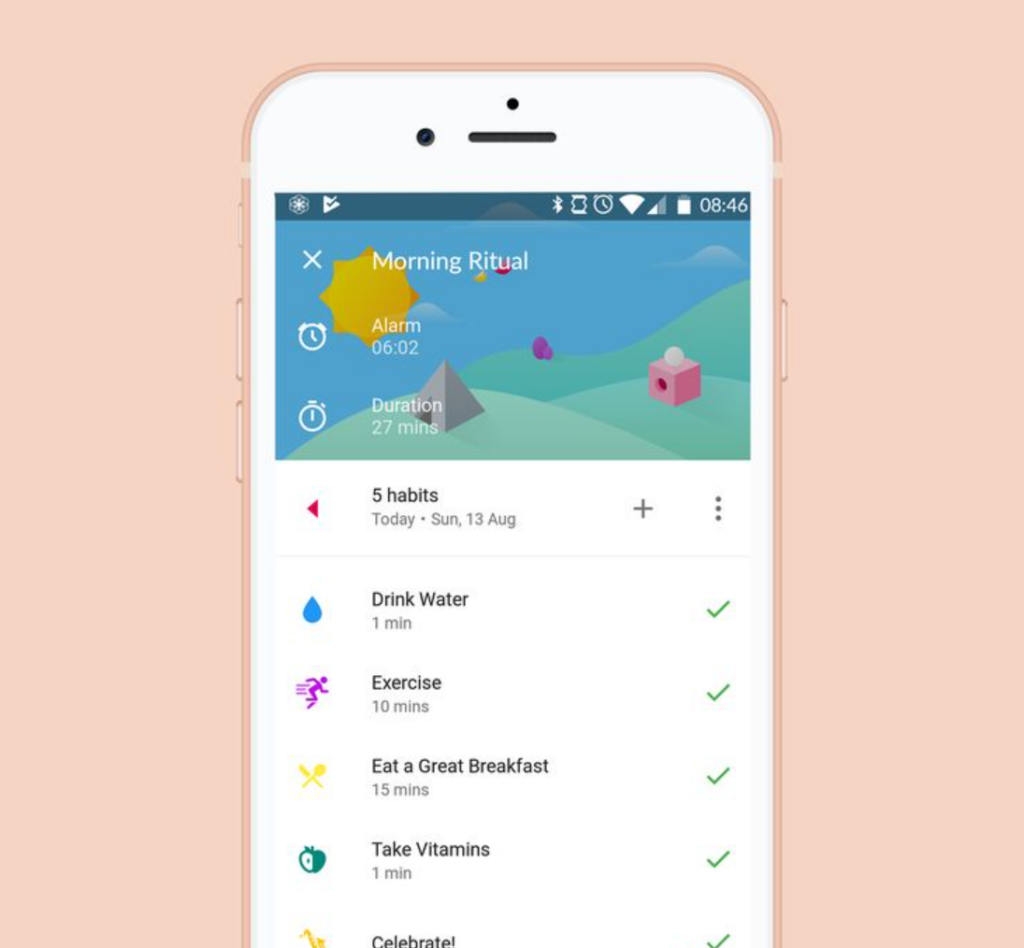
Several popular habit-tracking platforms have added social challenge modules alongside their streak systems. A recognition that confidence is a trainable daily practice.
Journaling and Reflection Prompts
Structured evening check-ins about your interactions. Some of the most downloaded journaling platforms now include dedicated social confidence templates. Turns vague self-development goals into measurable self-awareness.
Calm and Grounding Tools for Anxiety
Breathing exercises, guided wind-downs, and pre-event centering. The leading meditation platforms have expanded into situation-specific modules – “before a presentation” and “pre-social” sessions designed to lower the floor so your skills can reach the ceiling.
Skill-Building Journeys
Multi-week programs that define charisma and communication as trainable domains with progressive daily lessons. A growing number of expert-backed learning platforms now offer structured communication tracks alongside their core content – combining an app for better communication skills and one that just explains them.
A 14-Day Practice Plan (Small Steps That Compound)
Days 1-3: notice your defaults – how you enter rooms, respond to questions, and where your eye contact goes.
Days 4-7: one micro-challenge per day is all it takes. Ask an extra question, pause for two seconds before responding, or introduce yourself to someone new.
Days 8-11: layer in body language. One cue per day – posture, hand gestures, vocal pace.
Days 12-14: time to combine all of the above. Run a full conversation using multiple skills, later on reflect on what feels natural and what requires more reps.
How RiseGuide Can Support Confidence & Social Skills
RiseGuide approaches communication mastery as a structured self-development journey – daily lessons sequenced by experts in articulation, body language, first impressions, and more. Each session runs about 15 minutes and pairs the concept with interactive tools.
The intelligence training journey supports social confidence indirectly: sharper thinking and faster recall make conversations easier under pressure. SEEK (the Ask Experts tool) gives on-demand expert answers mid-journey. Among apps to improve communication skills, riseguide stands out for its progressive, expert-backed roadmap.
FAQs
How fast will I see results?
With daily practice – exercises, micro-challenges, and reflection – small shifts show up within two to three weeks. You’ll catch yourself pausing before reacting, holding eye contact longer, choosing words more deliberately.
Is this useful for beginners?
Especially for beginners! Structured apps work best when you’re starting from scratch, because the sequencing handles the “what do I learn first?” problem.
What if I have social anxiety?
Start with grounding tools and observation exercises before jumping into challenges. The 14-day plan above is designed with gradual exposure in mind.