The world of tech is constantly evolving at a geometric pace and surviving in today’s environment means more than just being ahead of the curve; it means you can’t afford to pay ’catch up’ anymore! Whether you’re a developer, business owner, or just love technology, understanding the interplay between modern software architecture and user experience is essential. Many users enjoy this convenience and when dealing with digital transactions, often searching for efficient systems such as true wallet to manage their digital assets effortlessly. The line that has separated complicated backend code from front-facing user interfaces is finally breaking down, and as we delve into the newest technologies, it feels like the gap is getting shallower.
Getting a Grip on How Enterprise Software Evolved
There has been a huge revolution on how we build and consuming software. We migrated ourselves from heavy, monolithic structures to microservices that bring more flexibility. This shift isn’t just about technical debt, it’s about speed. If you are not updating your software in real time without crashing the whole system in today\’s market, then you are lagging behind.
The Rise of AI-Driven Development
AI has evolved from a technical buzzword to be relied upon in modern coding environments. Software is already assisting humans in writing better versions of itself, from automated debugging to predictive analytics. This symbiotic relationship minimizes the ‘human error’ component of logic, while amplifying the ‘human touch’ needed in UX design.
Learn More About The Power of Low-Code & No-Code Platforms
Democratization of development is the one among most revolutionary trends in software niche. Gone are the days of having to have a computer science degree before you can build a functional app.

Small business owners can use drag and drop components to build internal tools. Creating prototypes that took months can now happen in days. Minimizing the need for high-cost senior developers for menial tasks.
Why Logic Still Matters
But, it is still all about logic, even no-code. You need to be familiar with how the data flows. What may instead happen is that if the logic is bad, the “easy” software’s sheer speed will merely yield error decades faster than a human would. It’s not the syntax logical mapping is the future skill.
Integrating Cybersecurity in the DevOps Pipeline
Security was the last “checkpoint” before releasing software. Now it’s baked into every single step. This is known as DevSecOps. Software is continuously tested for vulnerabilities. Never trust, always verify. Systems that themselves plug up holes before hackers can find them.
Edge Computing and Software Latency
Whenever we are going towards a world of IoT (Internet of Things), then sometimes the “Cloud” is so far. Edge computing moves processing power closer to the data source.
Critical for autonomous vehicles and medical software. A substantial amount of data does not require transmitting over to a central repository for processing, as much can be performed locally. Sensitive information never needs to leave the network and can thus be even partially processed on the device.
How Quantum Computing will Affect Encryption
We are at the precipice of a quantum jump. Although still in its early stages, quantum software is being created for problems that would take traditional computers a thousand years to solve.
We are proposing new “Quantum-Resistant”Algorithms. Software capable of simulating the molecular structures at an atomic level. Crunching huge logistical questions in seconds.
Hyper-Automation in Business Processes
Hyper-automation is the combination of multiple technologies such as RPA (Robotic Process Automation) and AI to automate as many business processes as can be automated at scale.
Customer Support: A conversational agent that solves my problems, not just pushes out pre-packaged responses.
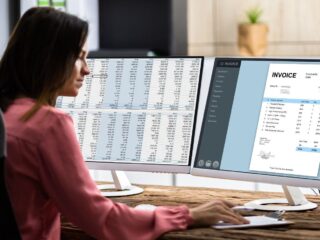
Data Entry: Reads invoices and fills up databases.
Decision Making: Software that recommends the right business pivot based on real-time market data.
Summary of Software Evolution Metrics
The data points that model the success of software in our new era is where we have to look next.
Deployment Frequency The best companies deploy code updates more than 200 times a year, versus once or twice a decade ago. The time that elapses between the moment an idea is born in the organization and when it becomes live code went from months to less than an hour, but only in optimized environments.
Change Failure Rate Modern automated testing reduces the rate of software crashes by nearly 60% in enterprise environments. Seat, with its “mobile-first” and “wallet-integrated” software has a 40% higher rate of usage compared to traditional desktop-only tools.
Technological Ups and Downs: The Human Element
It is human beings for whom software is created. We’re too often lost in the specs and the syntax, but if the software doesn’t solve a human problem, it’s futile. The future isn’t only about what software does, it’s about how intuitive it is.
This shows the importance of machine learning, where we see software that learns to adjust according to end-user and not opposite. This ultimate goal of this “Invisible UI” is when the tech works so well, that in such a way, it’s like it was never there.
Final Thoughts on Modern Development
The software niche is the hottest place to be in tech right now. From how we manage our virtual wallets to how we protect our national infrastructure, code underpins modern living. So looking forward to the rest of 2026 and beyond, we will continue focusing on speed, security and sustainability.”